
• Skip to primary navigation
  • Skip to main content
  • Skip to footer
Crescent Growth Capital, LLC

Crescent Growth Capital, LLC

Structuring project financing to incorporate tax credit equity.

  • About Us
  • Our Process
  • Our People
  • Past Projects
  • Contact Us

Non-profits

New Orleans Military & Maritime Academy

October 3, 2014 by

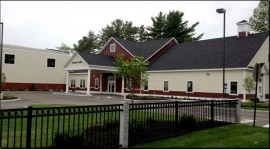
Inspired by the acclaimed military academy model employed by the Noble Street Charter School in Chicago, the New Orleans Military and Maritime Academy (“NOMMA”) opened its doors in August 2011. Requiring that all its student-cadets enroll in an on-campus Marine Corps Junior Reserve Officer Training Corps (MJROTC) unit, NOMMA accepts all students who have passed Louisiana’s 8th Grade high-stakes LEAP test. Students defined by the state as “at-risk” are particularly sought. School leaders believe that NOMMA’s emphasis on self-discipline and “moral literacy” coupled with a “standards-based” curriculum that clearly defines academic and behavioral expectations, creates a uniquely potent platform to inculcate good habits in today’s youth.

The charter school opened in a temporary facility, a former public elementary school dating to the 1950s, but from the beginning its leaders envisioned moving to a permanent home. A plan was devised to rehabilitate historic Buildings 16 & 71 in Federal City, a former naval base, and link them with new construction to produce an 85,000 square-foot, state-of-the-art school campus.

Click this link to watch a short video on the school: Community Impact: NOMMA

In October 2012, Crescent Growth Capital helped NOMMA close on a $17.9 million aggregate QEI with Dudley Ventures and SECDE Ventures, leveraging CDBG proceeds and Qualified Zone Academy and Qualified School Construction Bonds (“QZABs” and “QSCBs”) to help fund the $18.4 million construction budget. The closing was a massive undertaking, requiring a team effort from a number of parties, including Iberia Bank, the New Orleans Federal Alliance, the Algiers Development District, the U.S. Marine Corps and the Louisiana Office of Community Development.

Simultaneously, CGC authored sets of federal and state historic preservation certification applications for Buildings 16 and 71, mediated between project architects and the Louisiana Division of Historic Preservation, and aided in the creation of a new National Register Historic District: the U.S. Naval Station Algiers Historic District, which came into being on September 11, 2013. In 2014, the historic tax credit application and financing process was closed out, with NOMMA having incurred $10 million in Qualified Rehabilitation Expenses. This QRE total generated over $4.5 million in federal and state historic tax credit equity for the school.

For more information on the school, please visit their website.
UAB Health Systems

September 4, 2014 by

The University of Alabama at Birmingham Health Systems is an academic health center, comprised primarily of UAB Hospital and the VA Medical Center.  Spanning 11 city blocks of downtown Birmingham, UAB Hospital is the 18th largest hospital in the nation, with nearly 1,118 beds, and serves as the primary teaching hospital for the UAB School of Medicine.  Becker’s Hospital Review recently ranked UAB Hospital as one of the “100 Great Hospitals in America,” and UAB Medicine as one of the “150 Great Places to Work in Healthcare.”  Additionally, the publication reported that more than 290 physicians across 55 specialties were named to the “Best Doctors in America.”  With more than 16,000 employees, UAB Medicine is also the second largest employer in Alabama.

In September 2014, UAB Health System and Crescent Growth Capital worked with Hancock Bank and Enhanced Capital Partners to structure and close a $10MM Alabama State QEI, financing a new $7.2MM automated Medication Dispensing System and a $965K Pharmacy Management and Barcode Packaging System.  These upgrades will dramatically improve the hospital’s ability to efficiently dispense and track the medication provided to its patients, as well as reducing medication errors, improving quality of care, heightening medication security and optimizing inventory to reduce the impact of drug shortages.  Possibly the most important benefit of these new systems is their portability, allowing seamless integration with UAB’s existing infrastructure, and minimizing ongoing system maintenance and IT involvement.

Lexington Regional Health Center

July 28, 2014 by

Lexington Regional Health Center (“LRHC”) opened as Tri-County Hospital in September of 1976.  The hospital began with seven patients, 40 beds, five physicians, one PA, a board-certified surgeon, and visiting specialists.  The organization grew through the 1980’s and added additional services including radiology, therapy, rehabilitation, and hospice.  A 4,300 square-foot expansion in 1989 relocated six physical therapy rooms, added a meeting room, and included an area for wellness programs for the community.  The addition of Home Health Care services, which encompasses a 45-mile radius of Lexington, Nebraska, was completed in 1994.  Another expansion in 1996 provided more room for the physical therapy department with the opening of the Community Health & Fitness Center.  In 2005, Tri-County Hospital was designated as a Critical Access Facility by the State of Nebraska.

Over the past 10 years, the Hospital’s inpatient and outpatient utilization has grown significantly.  LRHC handles roughly one-third of all discharges in Dawson and Gosper counties, and more than half of the Hospital’s annual discharges are Medicare/Medicaid patients: LRHC has the 4th highest Disproportionate Patient Percentage out of all Nebraska hospitals.  In response to the ever-increasing demand for its services, LRHC began laying out a comprehensive renovation and expansion plan in 2010.

The two-phase construction plan includes the addition of a new operating room suite including 3 operating rooms, a new sterile processing department with supporting space, a new specialty clinic area, and a new central utility plant, as well as the renovation of 25 inpatient beds.

On July 28, 2014, Crescent Growth Capital worked with LRHC, Enhanced Capital, and Wells Fargo to close and fund Phase 1 of the NMTC financing, a $10.4MM State NMTC QEI, leveraged with Great Western Bank debt and USDA Rural Development Loans, for the $25MM renovation/expansion.

On November 20, 2014, Crescent Growth Capital and LRHC closed on Phase 2 of the expansion financing, utilizing $7MM of Federal NMTC allocation provided by Raza Development Fund.  By using the same leverage sources and NMTC investor, the Hospital minimized the incremental transaction costs associated with the second closing, and used the additional subsidy to round out the construction budget.

The two-phase NMTC financing provided significant subsidy to the project, facilitating the expansion of the Hospital’s footprint and scope of services — all at no additional cost to the low-income census tracts surrounding the Hospital.  The expansion is expected to create 24 new permanent FTE positions, while retaining the Hospital’s existing 170 FTE employees.

Brunswick Landing

March 10, 2014 by


16 Burbank Avenue, Brunswick, ME

In 2005, the federal government initiated its most recent round of military base closures under the Base Realignment and Closure (BRAC) process. The U.S. Department of Defense (DoD) and Congress have used this process five times over the last two decades to reduce and realign the nation’s military installations.

During the 2005 BRAC round, three Maine military installations were targeted for closure or realignment: Naval Air Station Brunswick, Portsmouth Naval Shipyard, and the Defense Finance and Accounting Services Center in Limestone. In August of 2005, the federal BRAC Commission saved two of those installations, but voted to close Naval Air Station Brunswick (NASB) after 68 years of operations.  The closure resulted in 6,500 jobs lost within the immediate community and far reaching economic impact.

In August, 2013, Priority Real Estate Group completed Phase I of the renovation of 16 Burbank Avenue and 62 Pegasus Street – two properties at the former Naval Air Station known as Brunswick Landing.  16 Burbank Avenue is the former Navy Lodge, a 15,000 square foot building converted to accommodate 28 classrooms and a life skills room on the main floor and professional offices on the second floor.   62 Pegasus Street, the 26,000 square foot former Navy Recreational Building and Bowling Alley, was converted to classrooms, a day care, an indoor recreational room, occupational therapy room and professional offices.  Both of these properties are leased to Providence Services Corporation – the largest provider of services to children with Autism and developmental disabilities in Maine.

In March, 2014, Crescent Growth Capital helped Priority Real Estate Group (“PREG”) close and fund a $10.2mm Maine State NMTC QEI to consolidate Phases I & II and complete the construction of Brunswick Landing Phase II.  These two Phases represent much needed job creation and an economic stimulus to an otherwise blighted area: Phase I of the Brunswick Landing created a combined 142 new jobs for Providence Services and Coastal Ortho & Sports Medicine, with annual salaries ranging from $28,000 to $650,000.  Phase II will allow Providence to combine two more regions at the Brunswick Landing location, relocating 60 staff members to the area and setting the stage for future growth.

There are over 10,000 veterans in Midcoast Maine, many of whom had a connection to Brunswick Naval Air Station. With the base closure, the veterans did not have a presence in the community to offer services nor the financial means of establishing one.  As part of Phase II, Priority Real Estate Group renovated 2,000 square feet of the 62 Pegasus Street property at a cost of $200,000 and leased the space to the Midcoast Veterans Council of Maine for $1 per year.  This donation allowed the Council to set up a Midcoast Veterans Resource Center aptly located on the former Naval Air Station Property where they can service the many veterans in our community.

16 Burbank AveBrunswick, ME 04011

New Orleans Center for Creative Arts

December 19, 2013 by

New Orleans Center for Creative Arts is a regional, pre-professional arts training center that offers students intensive instruction in culinary arts, dance, media arts: filmmaking & audio production, music (classical, jazz, vocal), theatre arts (drama, musical theatre, theatre design), visual arts, and creative writing, while demanding simultaneous academic excellence.

NOCCA was founded in 1973 by a diverse coalition of artists, educators, business leaders, and community activists who saw the need for an institution devoted to our region’s burgeoning young talent. Wynton and Branford Marsalis, Harry Connick, Jr., Terence Blanchard, Jeanne-Michele Charbonnet, Wendell Pierce, Anthony Mackie, Mary Catherine Garrison and Gary Solomon Jr. are only a few NOCCA graduates who can attest to the extraordinary educational opportunity the Center represents to the children of Louisiana.

NOCCA was operated for its first quarter-century by the Orleans Parish School Board; students were required to be residents of New Orleans. In 2000, the school relocated to its present campus, on the banks of the Mississippi River in the Faubourg Marigny neighborhood, and its governance was revised to provide for direct administration by the Louisiana Board of Elementary and Secondary Education. At this time NOCCA began accepting students residing anywhere in Louisiana, in service of its broadened role as the premier performing and visual arts high school for the state.

In the ensuing years, NOCCA’s curriculum matured to encompass concentrations in eleven disciplines, including jazz, classical instrumental music, drama and the visual arts. The events of 2005 tested the institution, scattering its faculty and student body across the country, but NOCCA’s stakeholders responded by embracing a bold plan for growth.

Additional concentrations, in the digital media and culinary arts were launched, and, in 2011, a longstanding dream to offer at NOCCA a full school day of instruction came to fruition with the debut of the Academic Studio. For the first time, curricula in math, science and the humanities were taught on campus, making it possible for NOCCA students to acquire an innovative, fully comprehensive, arts-centered secondary education without having to leave the site. NOCCA’s progress has come in the face of ten budget cuts, some occurring mid-year, over the last four years; the school’s state funding has decreased by 25% during this period.

Responding to these challenges with characteristic boldness, the NOCCA Institute – NOCCA’s community support and advocacy organization – developed a plan for the NOCCA Forum, a dramatic $26.4MM proposal to lay the foundation for the school’s future. The Forum will incorporate cutting-edge facilities and include revenue-generating elements to provide independent means to the institution’s endeavors.  In early 2013, NOCCA contacted Crescent Growth Capital (“CGC”) to assist them in bringing together financing for the Forum.

On December 19th, 2013, CGC helped NOCCA close and fund a $12.5MM Qualified Equity Investment (“QEI”), using New Markets Tax Credits allocations of $6.5MM and $6MM provided by First NBC Bank and Whitney Bank, respectively, and leveraging an estimated $7.8MM in Federal and State Historic Tax Credit equity, and $14MM of Qualified Zone Academy Bonds (“QZABs”).  The Federal and State New Markets and Historic Tax Credit equity, combined with $14MM of QZABs provided the NOCCA Institute with nearly $12.5MM in combined subsidy, which amounts to nearly half of the project budget.

Children’s Medical Center – Heart Center Interventional Suites

October 31, 2013 by

Tracing its origins to the creation in 1913 of a pediatric dysentery clinic established on the lawn of Parkland Hospital, Children’s Medical Center Dallas has grown to the fifth largest pediatric healthcare organization in the nation. In 1967, the present facility opened within the nascent Dallas Medical District. In the past 45 years Children’s has developed numerous centers of excellence, among them pediatric cardiovascular care. The Comprehensive Center for Heart Care at Children’s Medical Center today attracts referrals from throughout the region, the nation, and internationally.

The Heart Center’s units have always been spread out across different floors of the hospital, scattered throughout the campus. To increase patient capacity, improve care outcomes, and provide additional research opportunities, Children’s developed a Master Design Plan for a state-of-the-art centralized Heart Center.  In 2010, after three years of planning, Children’s launched a $77 million, multi-phase initiative that would result in the consolidation of every functional unit of the Heart Center onto one floor of Children’s main hospital. Children’s anticipates that its plan, once fully realized, will meaningfully improve collaboration among specialists, streamline administration by locating back offices adjacent to care administration areas, and promote improved cooperation from the families of the children receiving care, an essential component of pediatric medicine.

In late 2012, Children’s brought Crescent Growth Capital (“CGC”) in to help them secure New Markets Tax Credits to help finance the fourth phase of this plan: a new $11.1 million Interventional Suite.  The fourth and most expensive phase of Children’s Master Design Plan, the Interventional Suite project will include new, state-of-the-art operating rooms and catheter labs, MRI facilities, a multi-purpose procedures room, and a relocated cardiac prep & recovery unit.  On October 31, 2013, CGC helped Children’s close and fund a $10.5MM Federal Qualified Equity Investment to finance the construction of the Interventional Suite, using a $10.5MM allocation of Federal New Markets Tax Credits provided by Hampton Roads Ventures, and NMTC equity provided by AT&T Corp.

Not only will this subsidy consolidate and significantly upgrade Children’s ability to provide state-of-the-art patient care, but it will also free up hospital funds to open 5 additional pediatric primary care clinics in distressed neighborhoods, locating non-emergency care within communities of need and freeing up valuable ER space within the main hospital for emergency cases.


  • « Go to Previous Page
  • Page 1
  • Interim pages omitted …
  • Page 8
  • Page 9
  • Page 10
  • Page 11
  • Page 12
  • Interim pages omitted …
  • Page 14
  • Go to Next Page »

Learn more about our process.

Our Process

Contact Us

Footer

NEW ORLEANS OFFICE
201 St. Charles Avenue
Suite 4205
New Orleans, LA 70170
504.378.3470

DALLAS OFFICE
13355 Noel Road
Suite 1100
Dallas, TX 75240
214.746.5065

SAN ANTONIO OFFICE
100 W. El Prado Drive
Unit 301
San Antonio, TX 78212
210.355.3313

Copyright © 2026 Crescent Growth Capital, LLC · Privacy Policy · Web Design