
New Orleans’ large population of African American Roman Catholics is yet another unusual characteristic distinguishing the Crescent City from other places in America. Catholics constitute a plurality of the city’s and region’s population, and their predominance has profoundly affected Greater New Orleans’ educational system. Historically far more affordable than most independent private day schools operating in the United States, New Orleans’ Catholic schools long educated great numbers of students hailing from all backgrounds, with working class pupils always comprising a large proportion of the total student body.
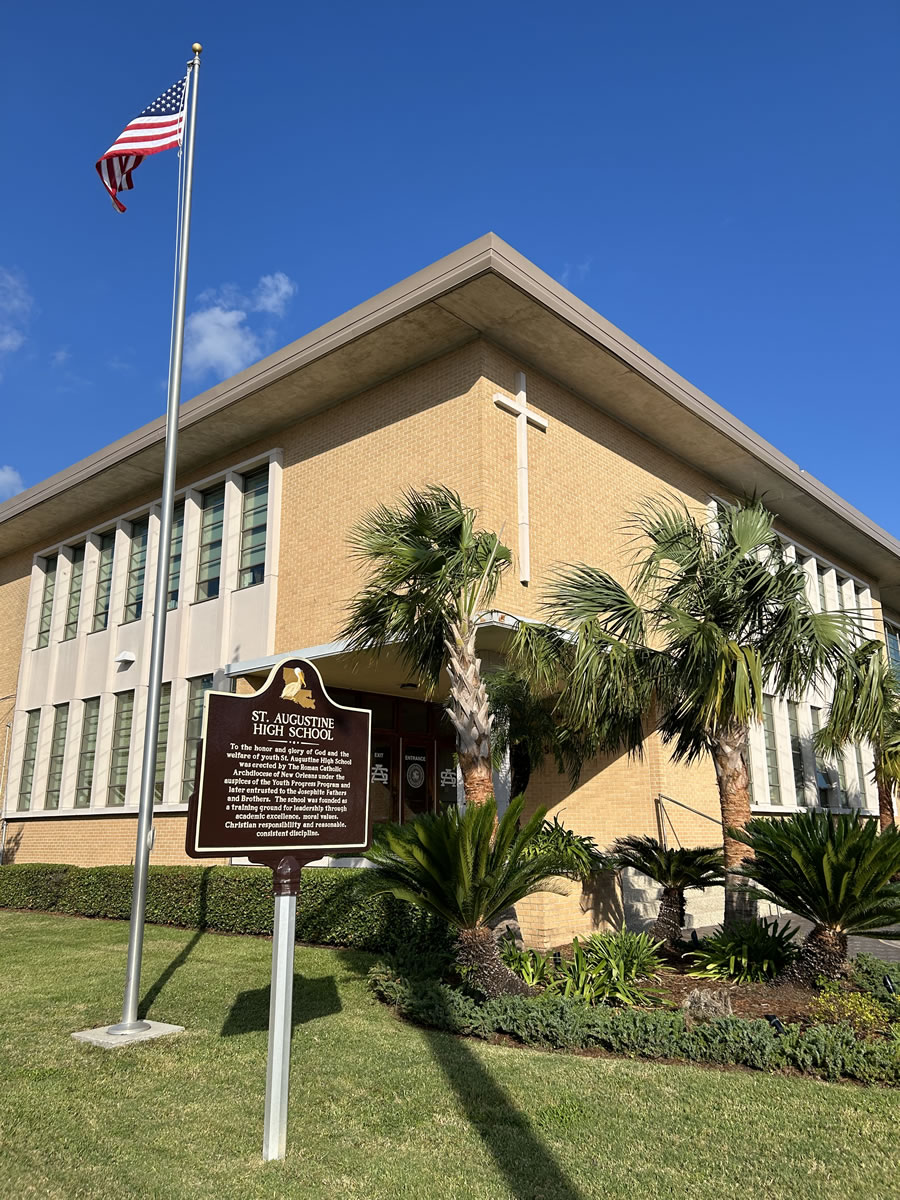
And yet as late as the mid-20th century, an all-boys Catholic high school education was not available to young Black men of New Orleans. The founding of St. Augustine High School in 1951 extended to African American high school-aged young men of the city an opportunity for single-sex Catholic education that had long been afforded their white co-religionists.
“St. Aug” quickly developed a reputation for both academic and athletic excellence. In the past seventy years, the school has grown into one of the nation’s premier incubators of Black talent, with the nearly 10,000 graduates of its college preparatory curriculum having regularly notched accomplishments like earning admission to Ivy League institutions, rising to executive positions within Fortune 500 companies nationwide, and serving as political and community leaders in both New Orleans and across the country. Countless professional athletes are alumni, and the school’s famed marching band has for decades been a highlight of the Mardi Gras season.
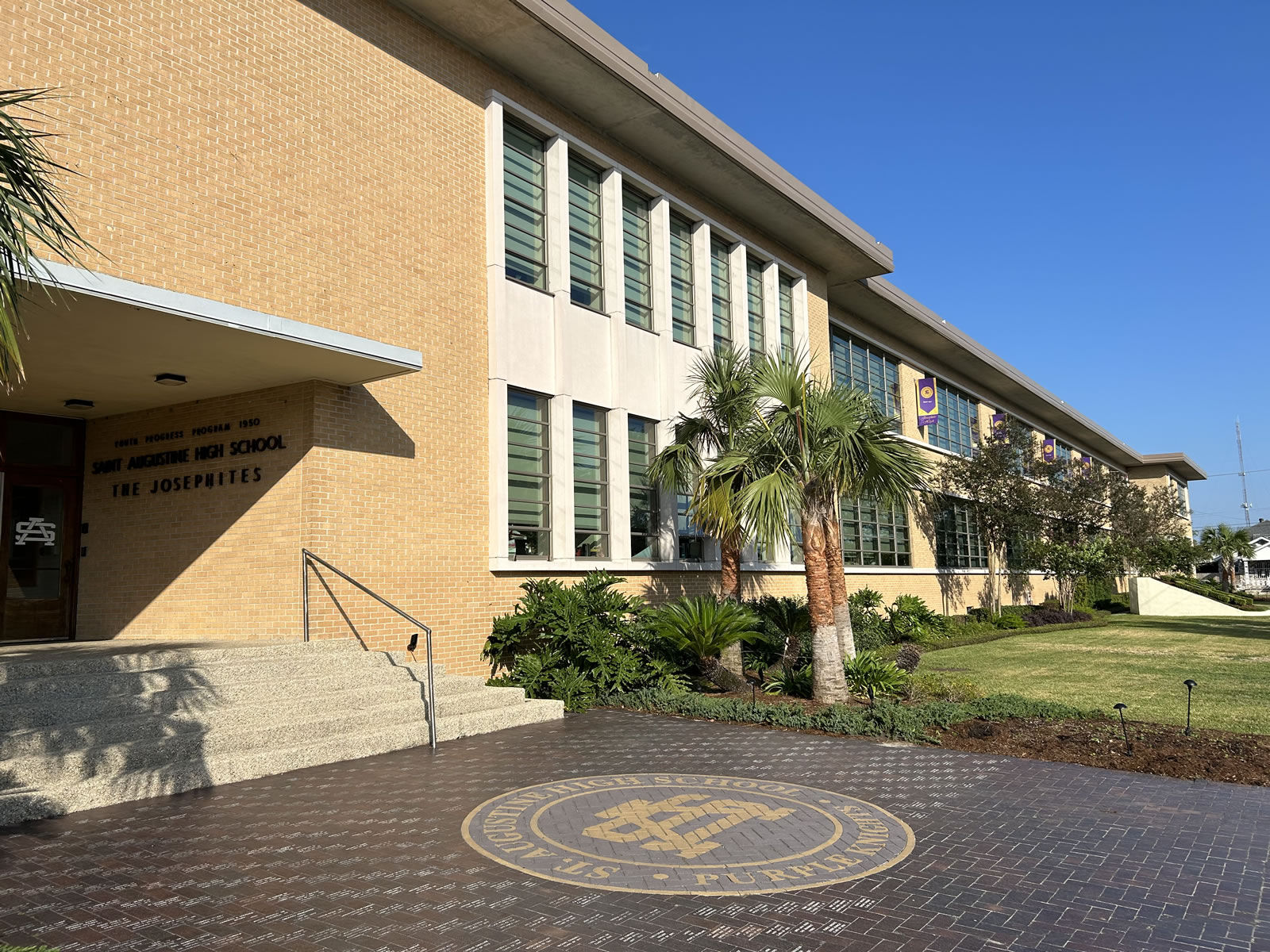
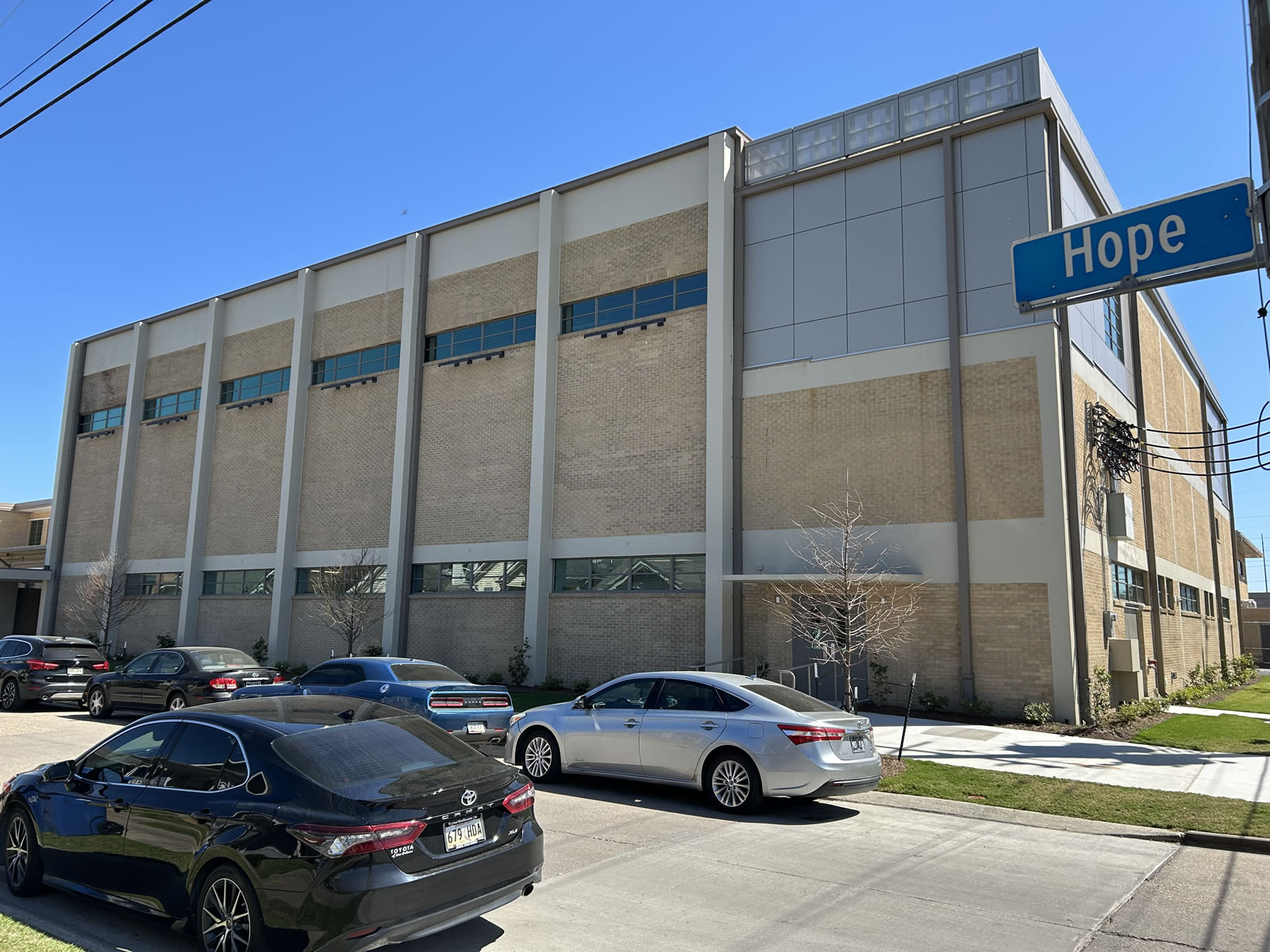
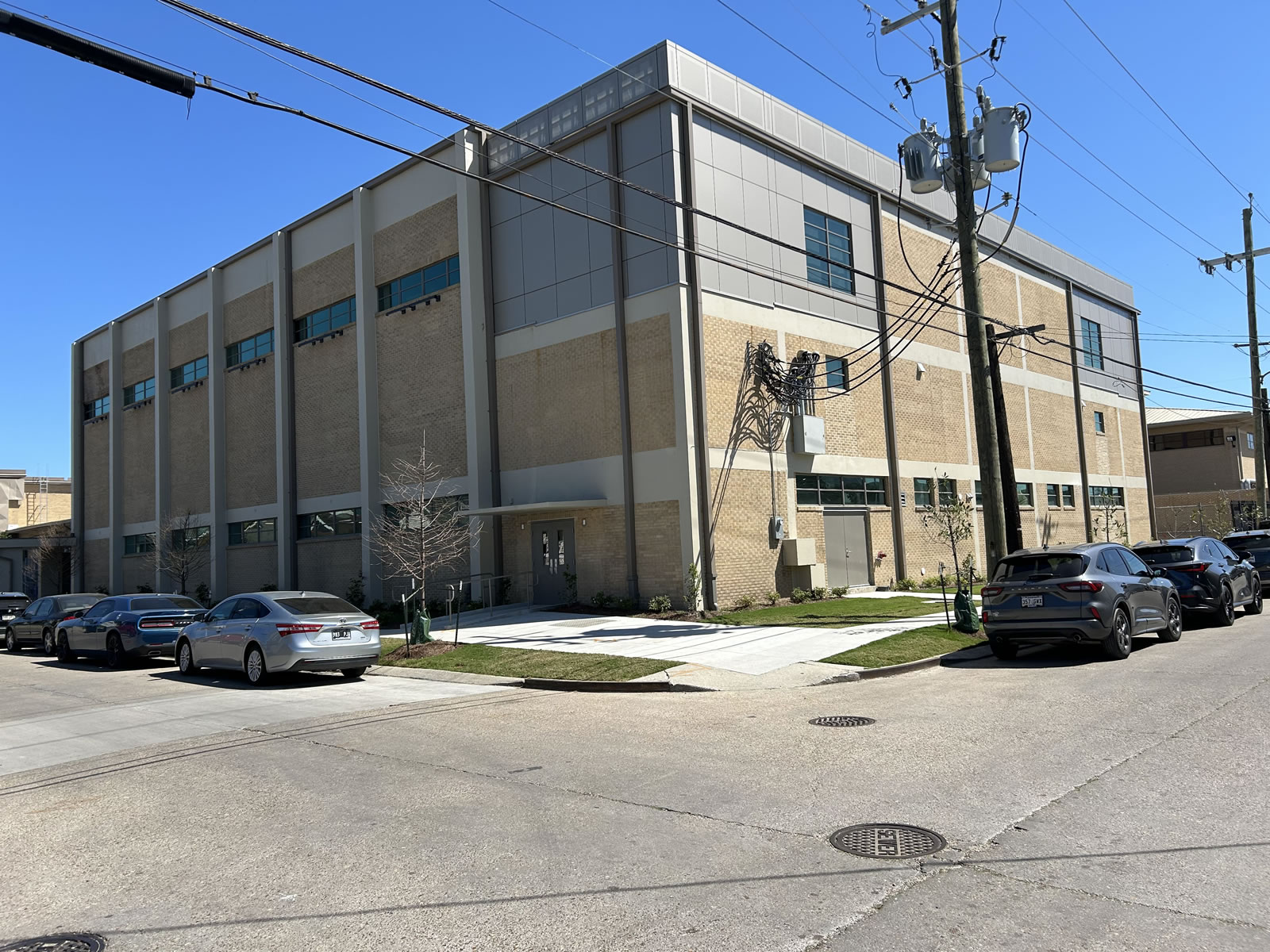
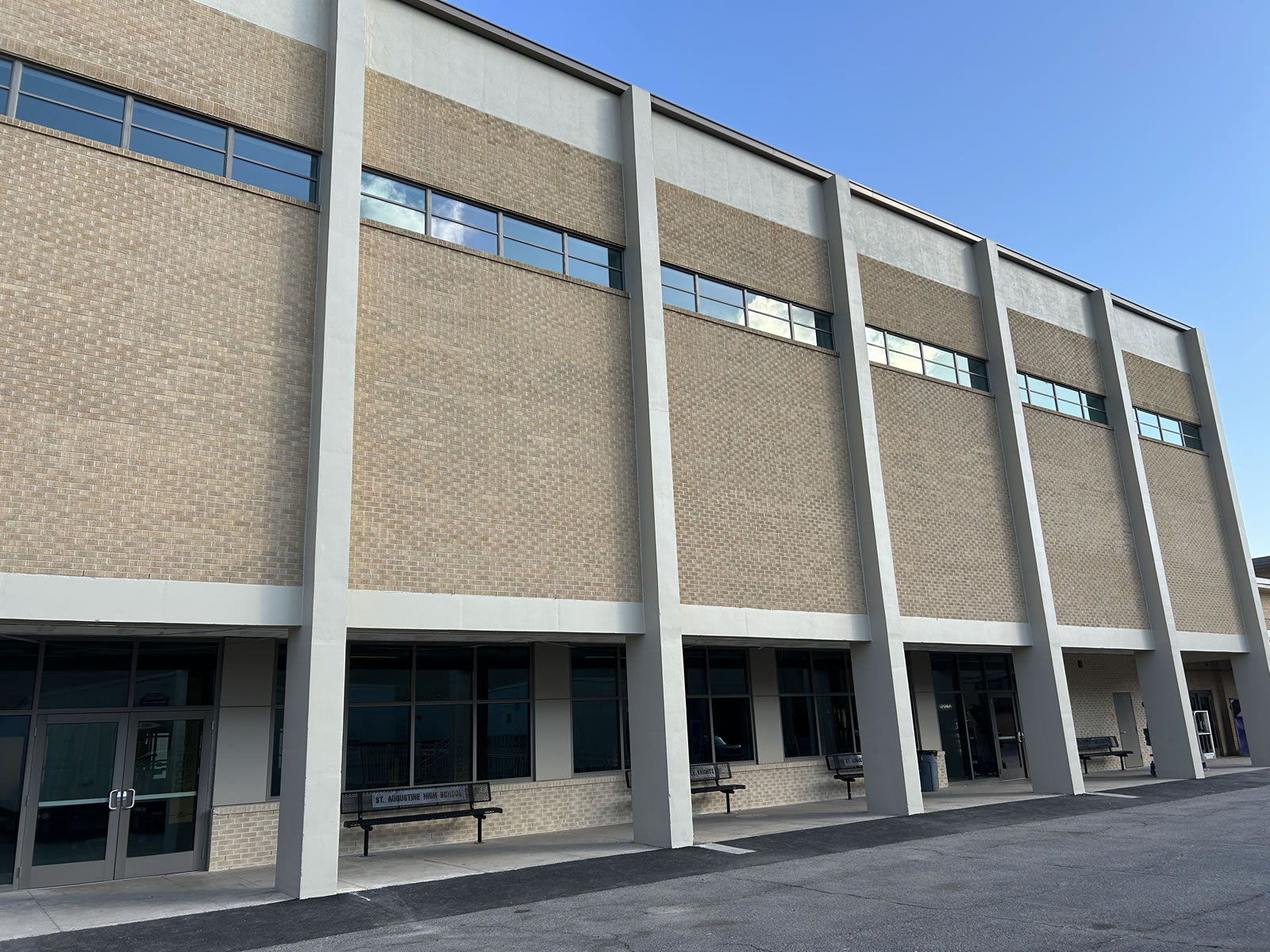
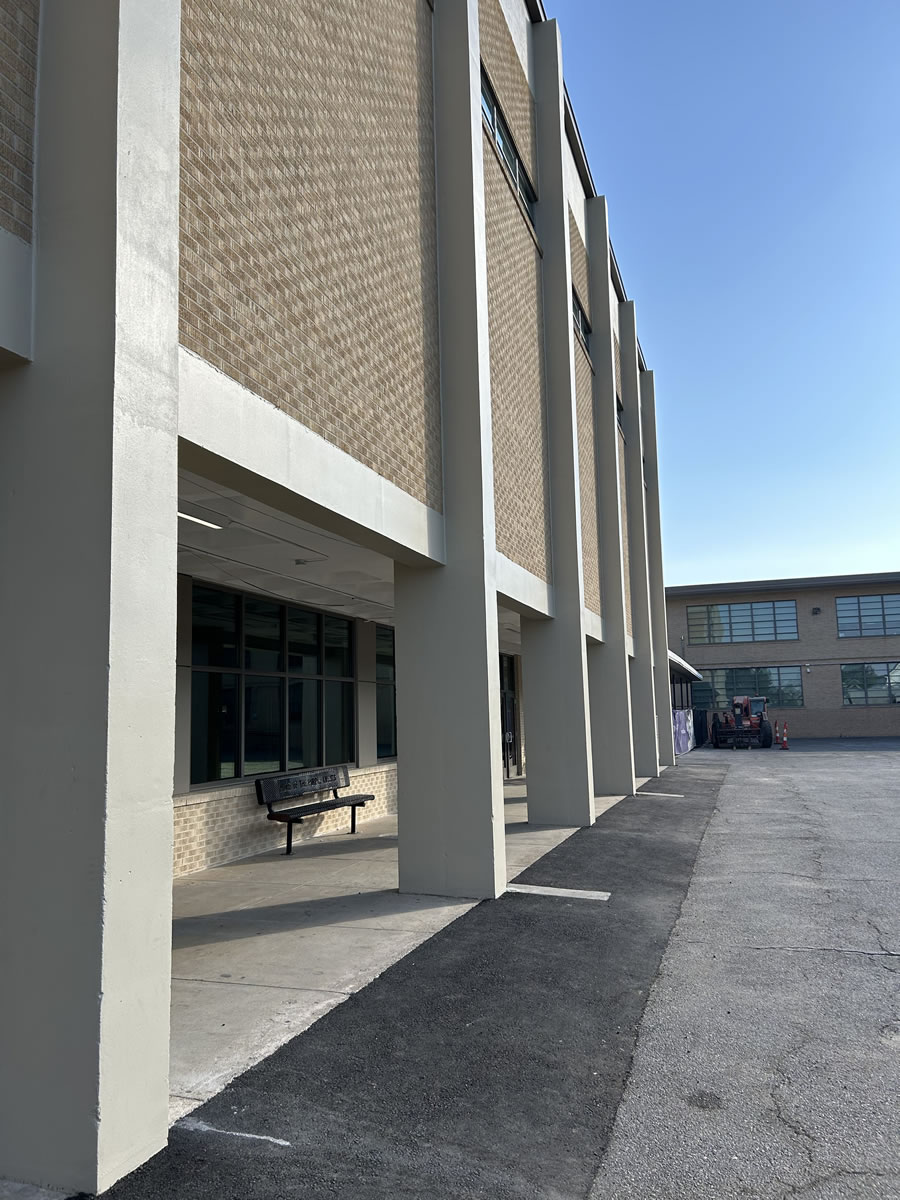
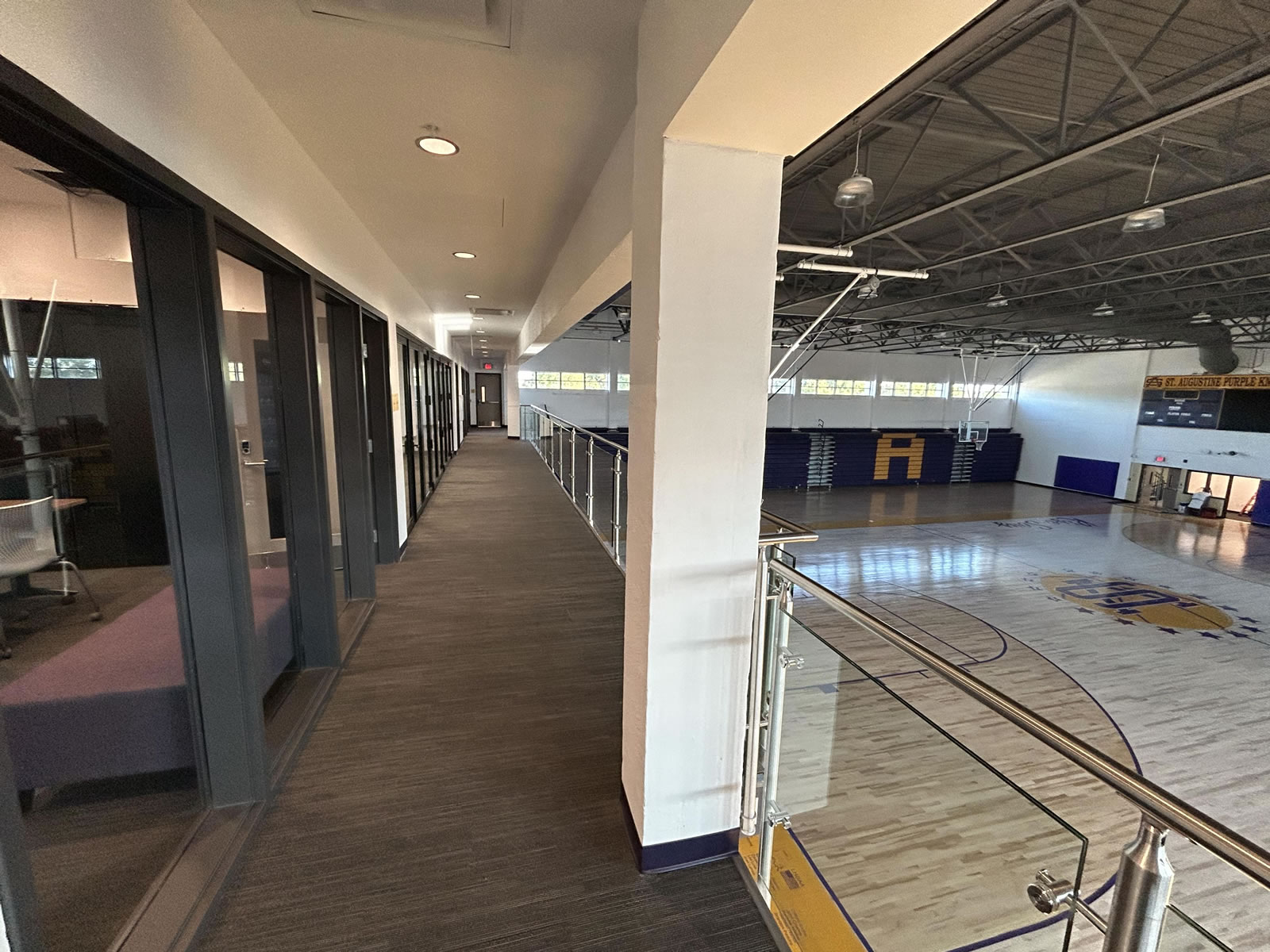
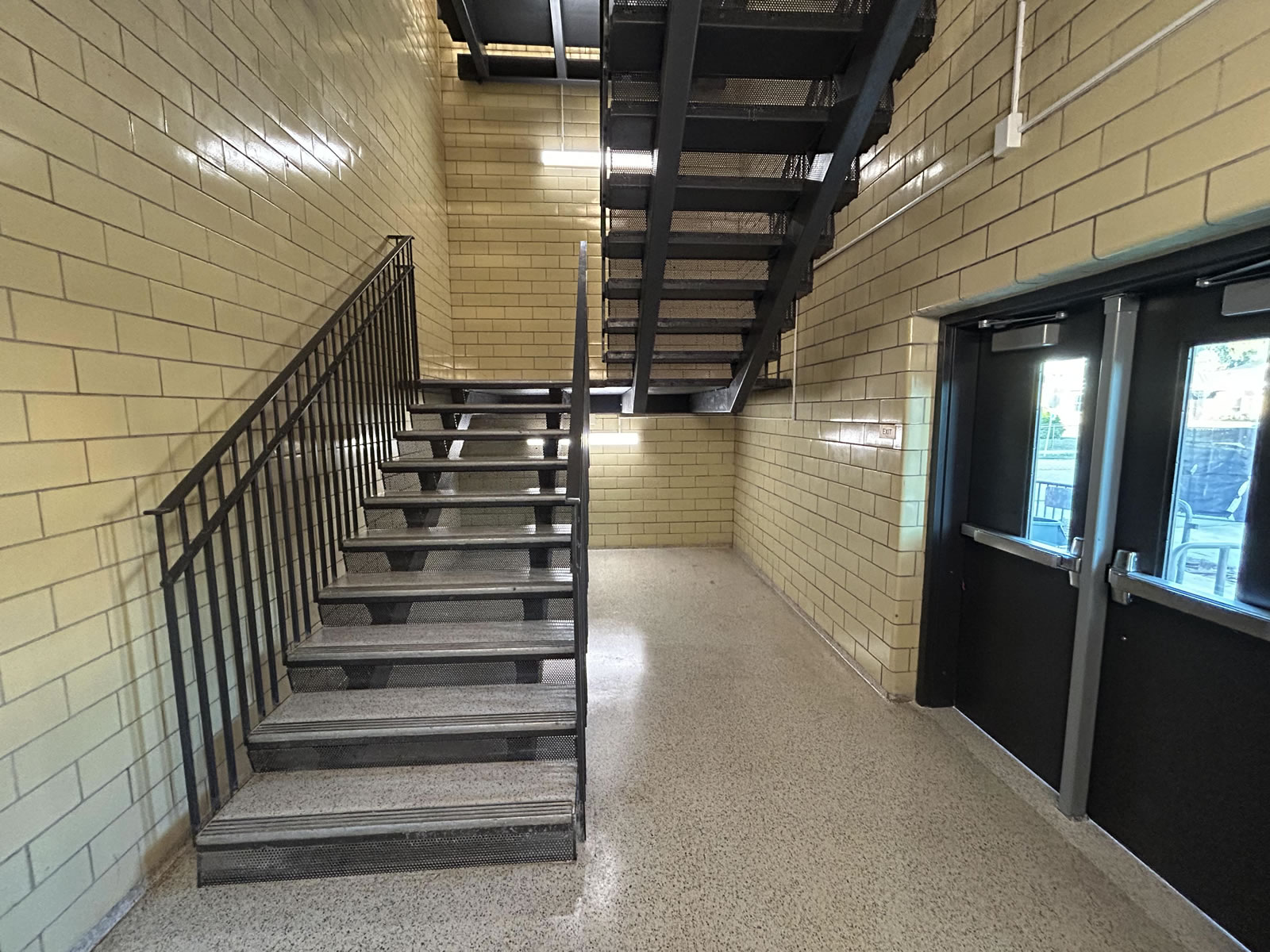
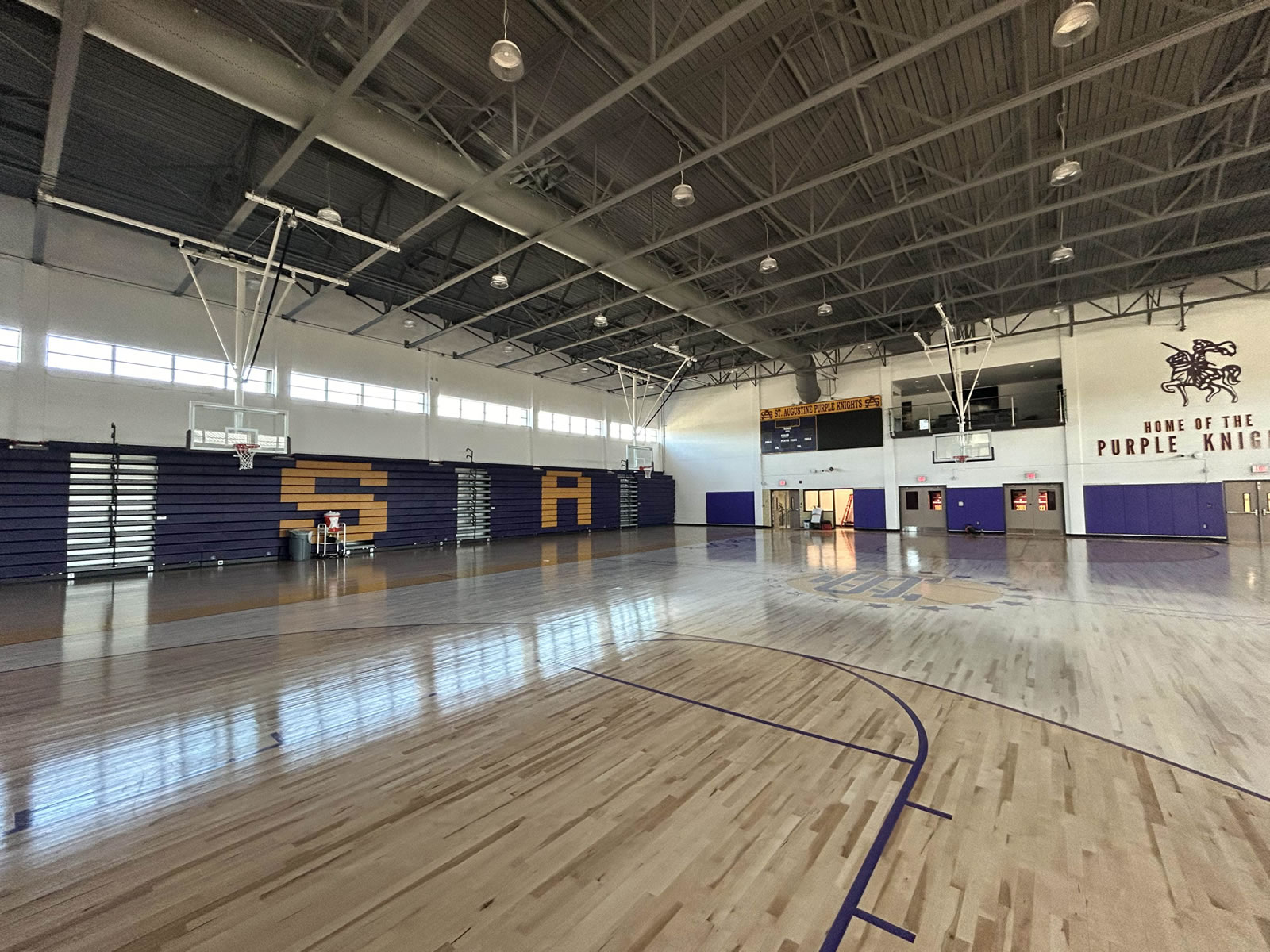
The present-day campus consists of three components: the original classroom building (1951), a 1971 addition consisting of a gymnasium, locker rooms, a band rehearsal room, and offices for athletic staff and music instructors, and a 2005 addition consisting of a library, computer labs, a cafeteria dining hall, a chapel and residences for school faculty. The 1951 classroom building epitomizes the thoughtful spatial composition and judicious mixing of materials that underpinned successful essays in Midcentury Modern exterior design. Subsequent additions to the campus – the 1971 gymnasium and the 2005 building – have succeeded at keeping the 1951 building primary amidst the ensemble.
However, by 2020 the school’s facilities were in need of comprehensive modernization. In 2021, St. Augustine initiated its Strategic Facilities Plan to guide a $25 million effort to upgrade the school’s academic and athletic infrastructure.
Executing the plan without imperiling other priorities wasn’t easy. St. Augustine strives to admit young men on a need-blind basis, which is a stretch given the socioeconomic makeup of the student body. More than seven in ten students qualify for free or reduced-price lunches, over one in three students qualify for federal Department of Education grants to pay for half their tuition, and more than seven in ten students receive some sort of need-based tuition aid. Resources redirected to supporting the facilities plan could not be easily replaced with tuition increases. A final hurdle appeared when construction contractors repairing Hurricane Ida damage failed to properly secure combustible materials in the gymnasium. On Thanksgiving Day 2021 a fire erupted, causing heavy damage to the school’s multipurpose 1971 gymnasium building.
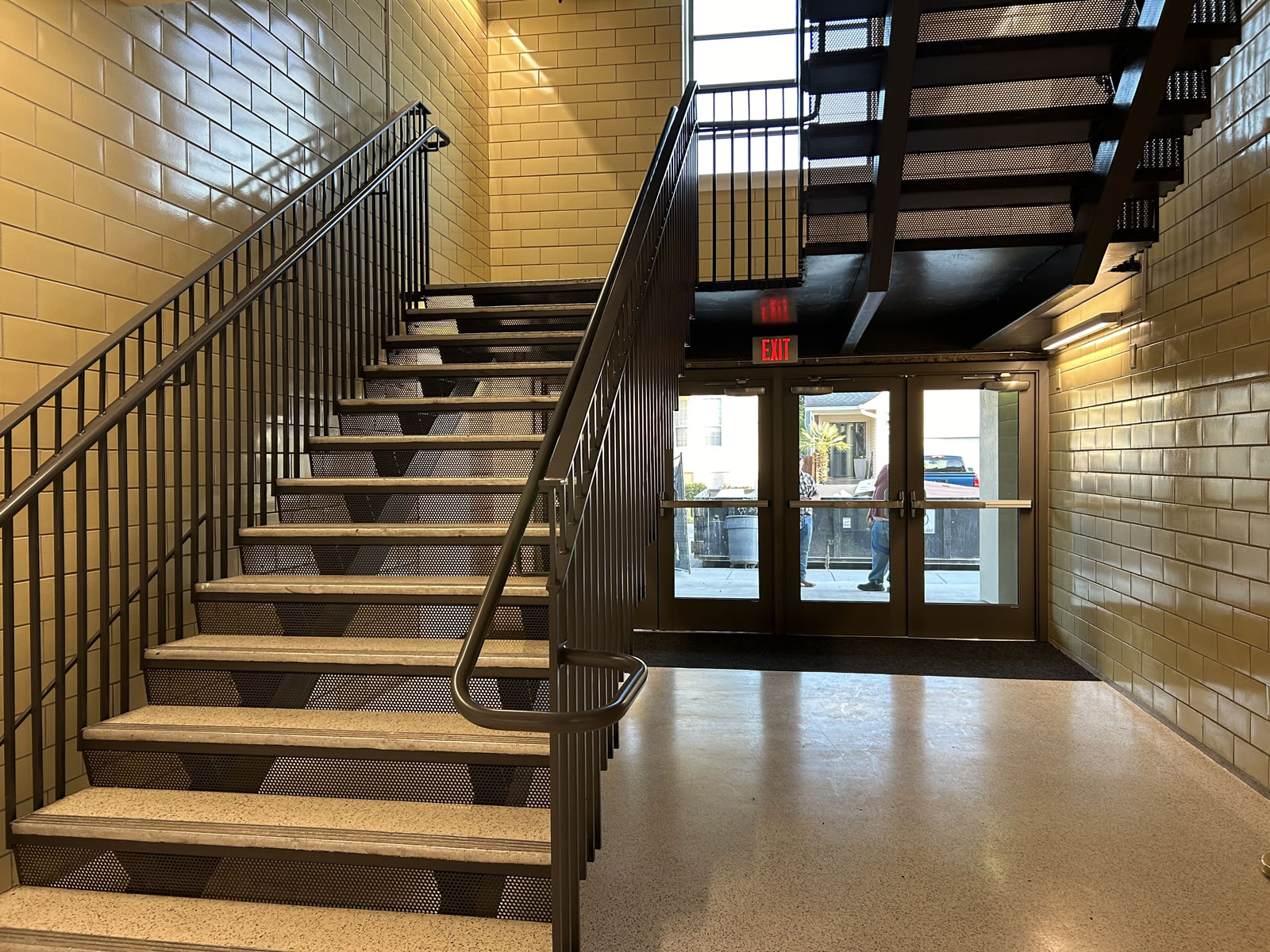
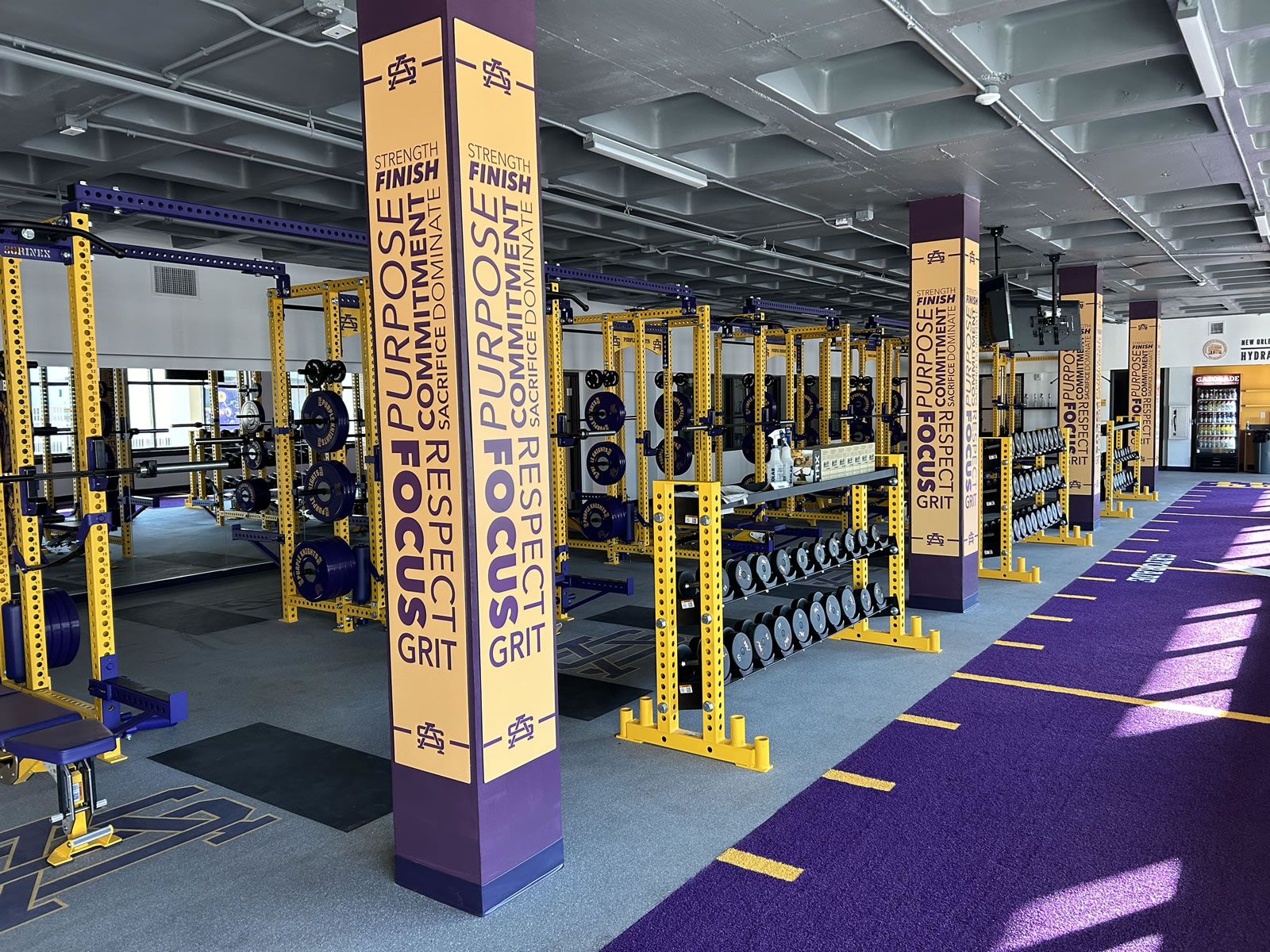
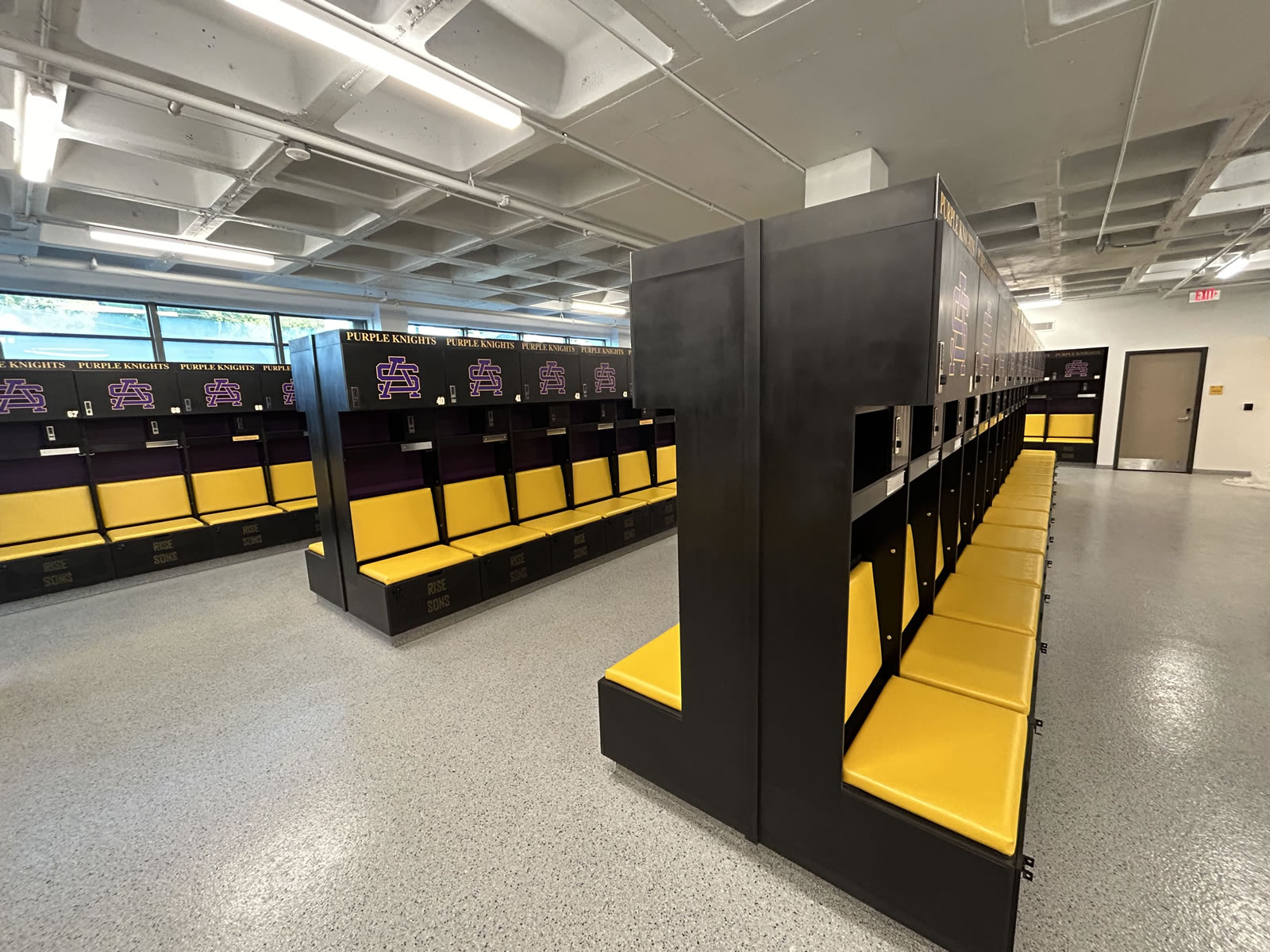
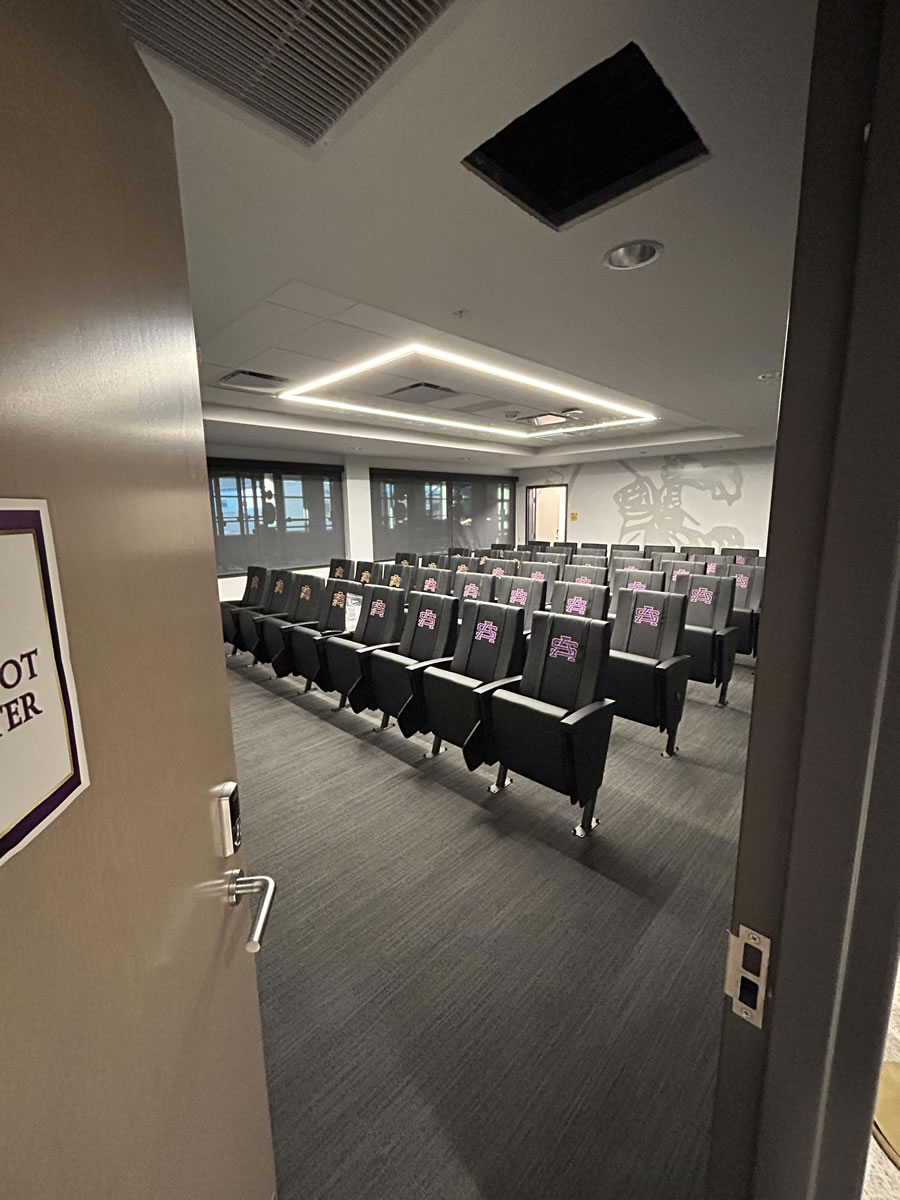
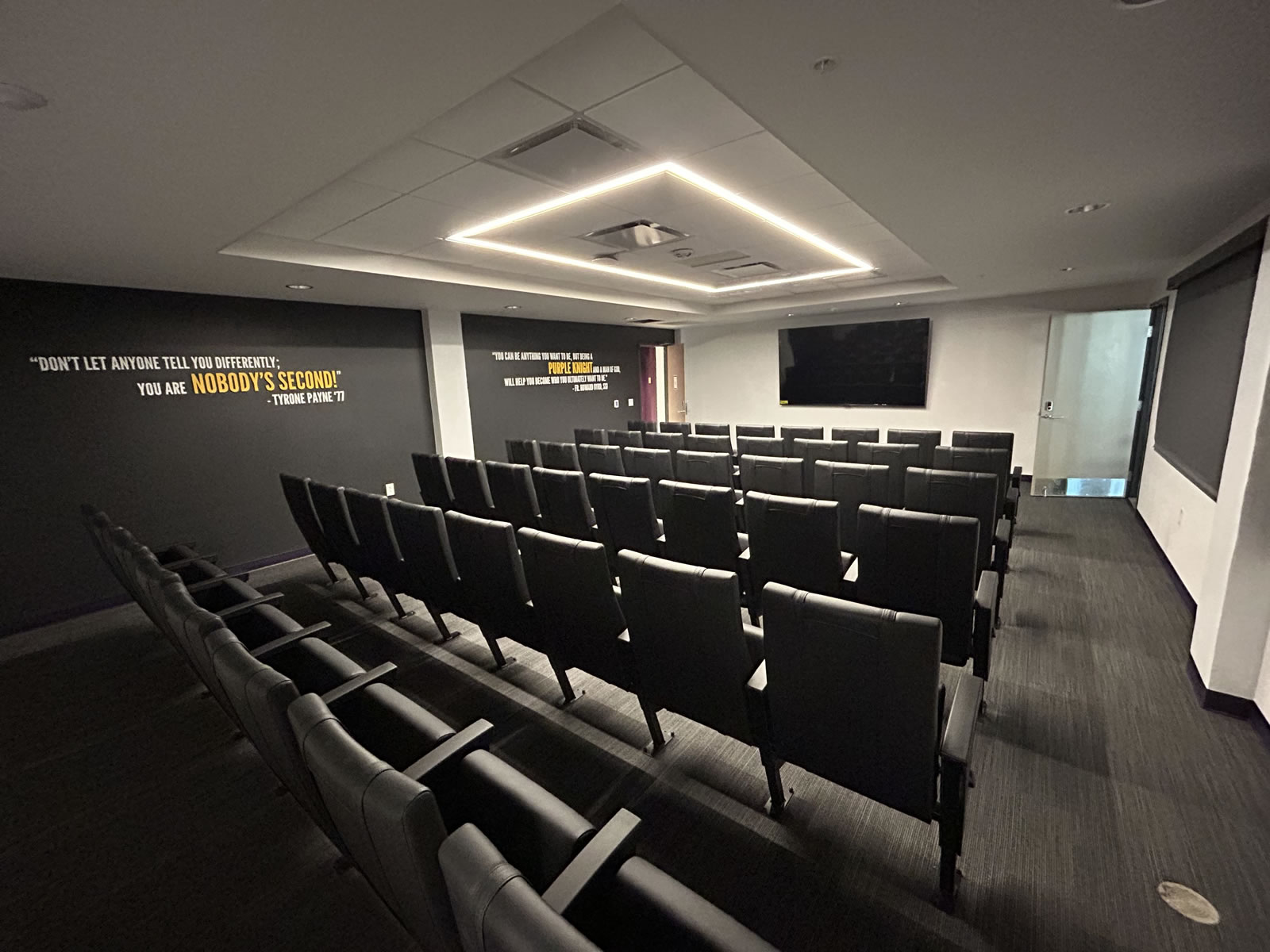
In need of innovative funding options, St. Augustine hired Crescent Growth Capital in 2023 to source and structure New Markets Tax Credit and Louisiana State Historic Tax Credit equity to help fund the conversion of the 1971 gymnasium into the Rigaud Health and Wellness Center. Crescent Growth Capital structured a financing incorporating Federal and Louisiana State New Markets Tax Credits, achieving financial closing in July 2024.
Meanwhile, Crescent’s in-house historic preservation consulting capabilities were deployed to prepare a three-element Historic Preservation Certification Application, with the only condition attached to Part 2 approval being a change in the specified color of some exterior metal cladding. Part 3 approval was received in May 2025, and the resulting historic tax credits were monetized in August. Crescent realized over $3.6 million in net subsidy for St. Augustine’s $13.6 million project.

2600 A P Tureaud Ave, New Orleans, LA 70119